All Categories
Featured
The majority of policies likewise have a flooring rate, often set at 0%, so the credited interest can not go listed below no. Nevertheless, fees can still lower your cash worth in years when the marketplace is down. Unlike, IUL cash worth is not directly purchased market subaccounts, which removes direct exposure to full market losses but also limits upside possible. Knowing these distinctions can help you decide if an IUL fits your goals, whether you desire steady, predictable development or are interested in index-linked returns with particular limits. Here are a few frequent misunderstandings:"IULs deliver the same returns as the stock exchange." Returns are shaped by caps, participation rates, and crediting methods- they do not match the index itself."The flooring rate suggests you can't lose cash. "While credited interest might not be unfavorable, charges and charges can still minimize your cash value. By cleaning up these misconceptions, investors can much better understand both the advantages and the limitations of IULs. Jane and Tom purchased an IUL hoping for strong gains without risk. They were surprised when rising charges and changing involvement rates reduced their returns gradually. Their experience reveals why it is essential to understand all the information before choosing an insurance or financial investment item. Indexed Universal Life( IUL )insurance coverage is typically promoted with marketing language that can overemphasize advantages and decrease dangers. While these policies can serve particular estate or tax preparation needs, the majority of financiers must comprehend the potential downsides before committing.-Numerous policy illustrations utilize strong bull-market periods to forecast future development, producing impractical expectations of constant returns. Sales products typically highlight attractive non-guaranteed columns, while ensured projections might show sluggish or perhaps unfavorable accumulation over time. Unlike term insurance coverage, COI in IUL policies increases with age. Over time, this rising cost can deteriorate the money value and cause the policy to lapse if not moneyed aggressively. A portion of each premium goes to commissions and administrative costs, and cancelling a policy early can activate surrender fees lasting 1015 years. Considering that index credits normally omit dividends, overall returns are lower than the index.
itself. Policy loans are not free income; they are advances versus the death advantage, and overdue balances reduce what beneficiaries get.-If loans go beyond the cash worth, the policy might collapse, possibly creating a taxable event and leaving the insurance policy holder with unforeseen liabilities. Some policies likewise enable loans or withdrawals from the cash worth, but these decrease the survivor benefit if not repaid. A policy with a$500,000 survivor benefit and $20,000 annual premium could show attractive forecasts if the presumed crediting.
rate is 67%. However if the insurer reduces cap rates or fees are greater than predicted, the real build-up could be significantly less, affecting both living advantages and death benefit longevity. An IUL might be worth considering in contexts, such as: Estate planning strategies where a long-term death benefit offsets estate taxes. High-income homes seeking additional tax-deferred development outside pension. Legacy preparation for dependents or charities, where the death advantage is a top priority. In these situations, versatile premium payments and index-linked crediting can be helpful, but only if you understand the terms and are comfy with the limits. This approach separates the insurance coverage and investment functions, making it much easier to adjust each separately. If the primary goal is market-based development instead of permanent coverage, an IUL may be more expensive and less efficient than investing straight while holding separate life insurance. Before selecting an IUL, be clear about your insurance coverage and financial investment goals. What identifies IUL from variable universal life insurance coverage? IUL cash worth is not directly bought market subaccounts, avoiding complete market losses but likewise leaving out complete upside possible. Why are dividends excluded from IUL index credits essential? Since IUL crediting generally omits dividends, overall credited returns are lower than actual index efficiency. For how long can give up charges last in IUL contracts? Early cancellations may set off surrender costs that can last for 1015 years, reducing access to funds. Why are policy loans often misunderstood in IUL sales? Loans are advances versus the survivor benefit. If not paid back, they decrease what recipients get and may set off a taxable occasion if the policy lapses. How can administrative and riderfees impact IUL performance? Layered costs such as administrative costs, rising COI, and optional rider charges can significantly reduce long-term money worth growth, specifically in low-crediting years. What theoretical example reveals IUL threats under altering terms? A$500,000 death advantage with$ 20,000 annual premiums may predict well at 67%presumptions, however lower cap rates or greatercosts might diminish actual accumulation substantially. If you're interested in an irreversible life insurance policy due to the fact that of the host of benefitsincluding lifelong coverage, a survivor benefit and money valueyou might think about an indexed universal life insurance coverage(IUL )policy. With this kind of life insurance coverage, the cash value part is tied to the efficiency of a bond or stock index you normally get to select. It is very important to comprehend how IUL policies work, because they're more intricate than basic long-term life policies. Here's what to understand. An indexed universal life policy is a kind of permanent life insurance, offering long-lasting coverage and a death advantage. It also includes a cash worth component, which is a savings-style account that grows over time. IUL policies also use minimum account interest earnings, called floors, and there may be a cap on the gains you can see in your account. You can obtain against the cash worth, withdraw from it or utilize it to pay premiums. Any growth is tax-deferred, so you'll pay taxes if you withdraw investment gains before your policy maturesbut not as those gains are earned. Part of your premiums approaches insurance coverage expenses, like administrative charges and the survivor benefit, and part goes towards the cash value. The crucial distinction between IUL policies and other kinds of universal life insurance is how the money worth is invested. IUL policies use versatility because you can use the money worth to cover some or all of your premiums. You might also have the option of changing your death benefit if your requirements alter over time, though your insurance coverage company might ask you to finish a medicaltest before increasing your protection. The money value component grows over time, but you have the option of putting the funds in a fixed-rate account, an indexed account or both. Your financial investment options depend on what the insurance provider provides . The money value account earns more interest when the index increases, and less if the index drops. The quantity of interest you make goes through a floor on losses and a cap on gains. The floor is the minimum you'll make on your indexed account. With a 0% floor, for instance, your account won't suffer losses when an index has a negative return. The cap is the greatest rate the account can earn, often set around 8 %to 12 %. This feature can be a downside when the market rises. If your cap is 10 %and your index increases by 15 %, for instance, you'll only earn10%. Another feature that can limit your revenues is the participation rate, which dictates the quantity you receive from the money value earnings. For example, say your cap is 10%and participation rate is 80%. The interest credited to your account would be based on 80% of that return, indicating you'll only make 8%of the index returns.
The survivor benefit is the quantity of money your beneficiary gets after you die. With IUL policies, the death advantage might be decreased by the quantity of any cash value withdrawals or cash worth loans you took out but didn't repay. This survivor benefit is usually not taxable for your successors. They both offer protection for life and include a death advantage and money value element that grows gradually. Entire life supplies more predictability due to the fact that the premiums and death benefit stay the very same, and your cash worth grows at a set rate that will not decrease. You may have lower premiums with less costs compared to an IUL, though you can't adjust
How Whole Life Insurance Builds Cash Value
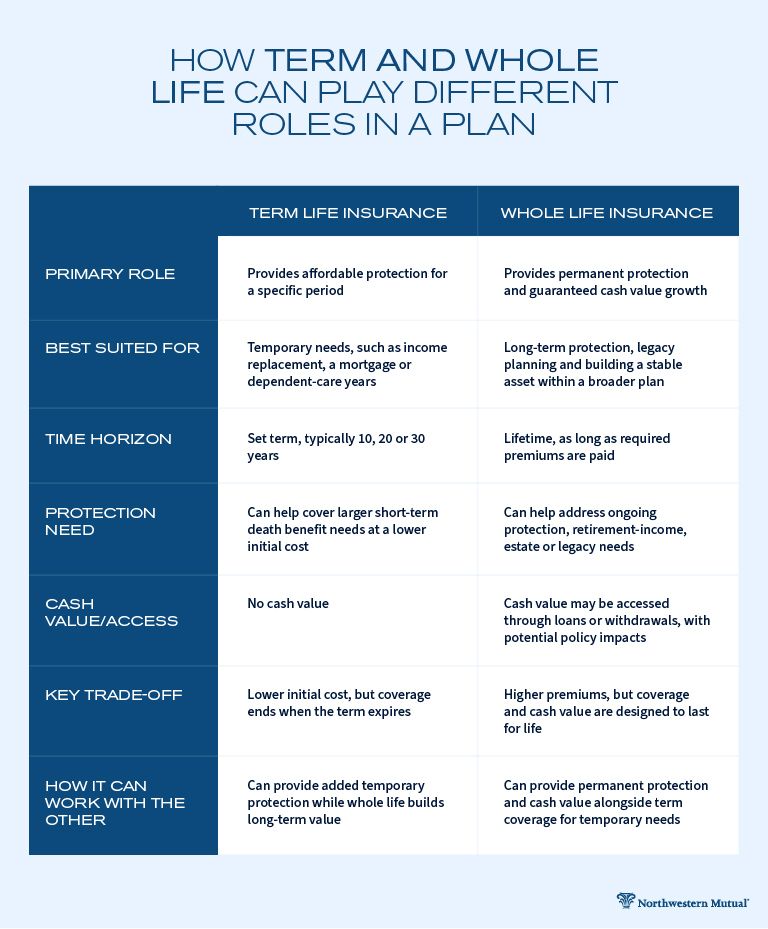
premiums or control the money value financial investment. The floor on the indexed part of your cash worth protects versus market swings. And because the policy isn't straight purchased the stock market, your danger is minimized. You have the choice of changing your premiums and survivor benefit while the policy is in force. You can also assign your money worth to different sub-accounts and possibly choose where the indexed account invests. Your recipients also get a survivor benefit that isn't normally based on earnings or estate taxes. You might withdraw or borrow from your money worth anytime without penalty. IUL policies do not limit how much you can contribute each year, allowing you to experience more development if you wish to contribute more. Caps and maximum involvement rates restrict the quantity of interest you can make in your indexed account. Your insurance provider does not directly buy stocks, so you will not gain from dividends paid to shareholders. Insurer charge fees for managing your account, which can consume into your cash worth. If you withdraw money that includes financial investmentgains before your policy grows, you might require to pay income taxes on the funds. The expense of an indexed universal life insurance coverage policy varies, depending upon factors like your age, where you live, your health and the protection quantity you select. Normally, indexed universal life insurance coverage policies cost more than term life insurance due to the fact that they consist of a cash value account and never everexpire. According to one quote, a healthy, nonsmoking 34-year-old female might pay between$71 and $96 a month for an indexed universal life policy, assuming$250,000 of protection. The same person may pay$32 to$44 a month for a term life policy and between $177 and$245 each month for a whole life policy.
The death advantage is the amount of money your recipient receives after you die. With IUL policies, the survivor benefit might be minimized by the quantity of any cash worth withdrawals or cash value loans you secured but didn't repay. This death advantage is generally not taxable for your heirs. They both offer coverage for life and include a survivor benefit and money value component that grows gradually. Whole life offers more predictability due to the fact that the premiums and death benefit stay the very same, and your cash worth grows at a set rate that will not decrease. You may have lower premiums with less charges compared to an IUL, though you can't adjust

premiums or control the money value financial investment. The floor on the indexed part of your money worth safeguards against market swings. And because the policy isn't directly invested in the stock exchange, your risk is minimized. You have the choice of adjusting your premiums and survivor benefit while the policy is in force. You can likewise allocate your cash worth to different sub-accounts and possibly choose where the indexed account invests. Your recipients also get a survivor benefit that isn't usually based on income or estate taxes. You may withdraw or borrow from your money value anytime without penalty. IUL policies don't limit just how much you can contribute each year, permitting you to experience more development if you wish to contribute more. Caps and maximum participation rates restrict the amount of interest you can make in your indexed account. Your insurer does not directly purchase stocks, so you won't take advantage of dividends paid to investors. Insurer charge costs for managing your account, which can eat into your money value. If you withdraw cash that consists of financial investmentgains before your policy matures, you might need to pay income taxes on the funds. The expense of an indexed universal life insurance coverage policy differs, depending on aspects like your age, where you live, your health and the protection quantity you pick. Usually, indexed universal life insurance coverage policies cost more than term life insurance due to the fact that they include a money value account and never everend. According to one quote, a healthy, nonsmoking 34-year-old woman might pay between$71 and $96 a month for an indexed universal life policy, presuming$250,000 of protection. The exact same person may pay$32 to$44 a month for a term life policy and in between $177 and$245 each month for a whole life policy.

Latest Posts
Finding Indexed Universal Life Benefits for Future Security

Life Insurance Options for Veterans

Securing Low-Cost 2026 Family Health Quotes